Meet Inspiring Speakers and Experts at our 3000+ Global Events with over 1000+ Conferences, 1000+ Symposiums and 1000+ Workshops on Medical, Pharma, Engineering, Science, Technology and Business.

Explore and learn more about Conference Series : World’s leading Event Organizer

Conference Series Conferences gaining more Readers and Visitors

Conference Series Web Metrics at a Glance

  • 3000+ Global Events
  • 100 Million+ Visitors
  • 75000+ Unique visitors per conference
  • 100000+ Page views for every individual conference

Unique Opportunity! Online visibility to the Speakers and Experts

Renowned Speakers

Ken Ware

Ken Ware

NeuroPhysics Therapy Institute and Research Centre Australia

Dr. Ulrich Wesemann

Dr. Ulrich Wesemann

Royal Bahrain hospital Germany

Lisa Feldman-Barrett

Lisa Feldman-Barrett

University Distinguished Professor of Psychology at Northeastern USA

Ekaterina Zubrickaya

Ekaterina Zubrickaya

Krasnoyarsk State Medical University Russia

Meijuan Lu

Meijuan Lu

President of Meng River Chinese Medicine Research Co. Ltd, USA

Hossein Ansari

Hossein Ansari

Board-Certified Neurologist And Certified Headache Specialist UC San Diego Health San Diego, California USA

James-Gratwicke

James-Gratwicke

The National Hospital for Neurology and Neurosurgery UK

Neurogenetics 2027

About Conference


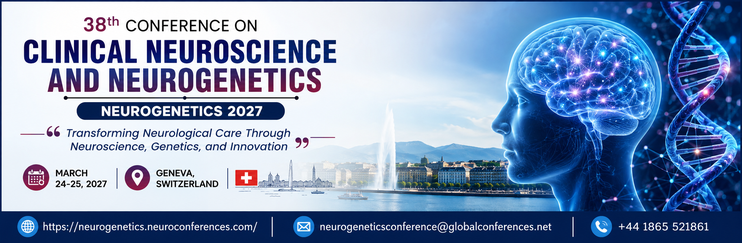
Neurogenetics 2027 | March 24–25, 2027 | Geneva, Switzerland
 
Conference Series LLC Ltd welcomes you to attend the 38th Conference on Clinical Neuroscience and Neurogenetics, to be held in Geneva, Switzerland, on March 24–25, 2027.
 
The theme for the conference is “Transforming Neurological Care Through Neuroscience, Genetics, and Innovation.
 
The 38th Conference on Clinical Neuroscience and Neurogenetics will bring together neurologists, neurosurgeons, neuroscientists, neurogeneticists, researchers, healthcare professionals, academics, and industry experts from around the world to exchange knowledge and discuss recent developments in clinical Neuroscience and Neurogenetics.
 
The conference will focus on emerging advances in NeuroscienceNeurogenetics, neurological disorders, genetic research, precision medicine, neurodegenerative diseases, clinical neurology, and innovative approaches to neurological care. The scientific program will provide opportunities for participants to explore current research, clinical developments, diagnostic approaches, therapeutic strategies, and future directions in the field.
 
With the coordination of the Organizing Committee, Neurogenetics 2027 is designed to provide a valuable international platform for professionals involved in neuroscience and Neurogenetics. Participants will have the opportunity to share their research, present innovative ideas, discuss clinical challenges, and establish professional collaborations with colleagues from different countries.
 
About Neurogenetics 2027
 
Neurogenetics disorders affect millions of people worldwide, ranging from rare genetic conditions to complex neurological diseases. Advances in genomic technologies, molecular neuroscience, precision medicine, and neurological research are contributing to a better understanding of disease mechanisms and the development of new diagnostic and therapeutic approaches.
 
Neurogenetics 2027 will provide a forum for researchers and healthcare professionals to discuss these developments and explore how neuroscience, genetics, and innovation can contribute to improved neurological care.
 
The conference program will encompass a broad range of topics covering clinical neuroscience and Neurogenetics, providing participants with opportunities to learn about current research, emerging technologies, clinical practices, and future trends in the field.
 
Why to attend Neurogenetics 2027?
 
The two-day international conference will bring together experts and professionals in Neurology, Neuroscience, Neurogenetics, Neurosurgery, Genetics, Biotechnology, and related fields. Participants can benefit from:
 
  • Lectures and presentations from renowned researchers and clinicians
  • Keynote sessions by prominent professors and healthcare professionals
  • Oral and poster presentations
  • Discussions on emerging developments in neuroscience and neurogenetics
  • Sessions on neurological disorders and genetic conditions
  • Insights into innovative diagnostic and therapeutic approaches
  • Opportunities for international networking and collaboration
  • Knowledge exchange among researchers, academics, clinicians, and industry professionals
  • Opportunities to present research and share scientific findings
  • Discussions on future directions in neurological research and patient care
 
Target Audience
 
  • Neurologists
  • Neurosurgeons
  • Neuroscientists
  • Neurogeneticists
  • Neuropsychologists
  • Neurophysiologists
  • Geneticists
  • Biotechnology professionals
  • University professors and academics
  • Medical researchers
  • Neurochemists
  • Neuromuscular specialists
  • Healthcare professionals
  • Pharmacists
  • Pharmaceutical and biotechnology companies
  • Drug discovery and development professionals
  • Medical students
  • Research scholars
  • Neurology organizations and societies
  • Neuroscience associations and foundations
  • Professionals involved in neurological research and clinical care


Sessions And Tracks

Track 1: Genetics and Neurogenetics

  • Molecular Genetics of Neurological Disorders
  • Genetic Variation and Neurological Disease
  • Neurogenetic Disorders and Inherited Conditions
  • Genotype–Phenotype Correlations
  • Genetic Characteristics of the Nervous System

Track 2: Neurodegeneration

  • Mechanisms of Neurodegenerative Diseases
  • Alzheimer's sickness and Parkinson’s Disease
  • Neurodegeneration and Neuronal Dysfunction
  • Cellular and Molecular Mechanisms
  • Emerging Therapeutic Strategies

Track 3: Neuroimmunology and Neuroinfection

  • Neuroinflammation and Immune-Mediated Disorders
  • Multiple Sclerosis and Autoimmune Neuropathies
  • neuroscience Genetics
  • Neurovirology and Neuroinfectious Diseases
  • Novel Therapeutic and Drug Development Approaches

Track 4: Neurological Diagnostics and Neuroimaging

  • Advanced Neurological Examination
  • Brain Imaging and Neuroimaging
  • MRI, CT and PET Imaging
  • Angiography and Diagnostic Procedures
  • Emerging Diagnostic Technologies

Track 5: Neurorehabilitation and Genetic Counseling

  • Advances in Neurological Rehabilitation
  • Acute and Occupational Rehabilitation
  • Rehabilitation for Neurogenetic Disorders
  • Genetic Counseling and Risk Assessment
  • Patient-Centered Neurological Care

Track 6: Alzheimer’s Disease and Dementia

  • Alzheimer’s Disease and Cognitive Decline
  • Dementia Diagnosis and Prevention
  • Memory Disorders and Neurological Dysfunction
  • Brain Aging and Neurodegeneration
  • Vascular Dementia and Stroke-Related Cognitive Impairment

Track 7: Neuropharmacology and Therapeutics

  • Principles of Neuropharmacology
  • CNS Receptors and Novel Therapeutics
  • Drug Development for Neurological Disorders
  • Drug Targeting and Therapeutic Strategies
  • Emerging Pharmacological Approaches

Track 8: Pediatric Neurology and Neurogenetics

  • Pediatric Neurogenetic Disorders
  • Neurodevelopmental Disorders
  • Genetic and Chromosomal Conditions
  • Perinatal Neurology and Child Health
  • Neonatal Neurological Disorders

Track 9: Neuro-Ophthalmology

  • Neurological Causes of Visual Dysfunction
  • Optic Nerve Disorders
  • Neuro-Ophthalmic Manifestations
  • Neuro-Ophthalmology in Multiple Sclerosis and Stroke
  • Diagnosis and Treatment of Neuro-Ophthalmic Disorders

Track 10: Neuro-Oncology and Neurology

  • Primary Tumors of the Nervous System
  • Brain and Spinal Cord Tumors
  • Metastatic Neurological Tumors
  • Molecular and Genetic Aspects of Neuro-Oncology
  • Advances in Diagnosis and Treatment

Track 11: Neuropathology

  • Molecular and Cellular Neuropathology
  • Neurocytology and Tissue Pathology
  • Metabolic and Nutritional Neurological Disorders
  • Myopathology
  • Peripheral Neuropathies and Neuromuscular Disorders

Track 12: Neurocardiology and Stroke

  • Neurocardiac Interactions
  • Stroke Mechanisms and Management
  • Heart–Brain Axis
  • Neurovascular Disorders
  • Arrhythmias and Autonomic Neural Regulation
  • Clinical Case Studies in Stroke and Neurocardiology

Track 13: Neurochemistry and Molecular Neuroscience

  • Neurotransmitters and Neuropeptides
  • Molecular Neuroscience
  • Chemical Neurobiology
  • Molecular Mechanisms of the Nervous System
  • Neuroinflammation and Immunoneurochemistry
  • Neural Control and Neurochemical Signaling

Track 14: Nursing and Neuroscience

  • Neurological Nursing Care
  • Neurotrauma and Neurosurgical Nursing
  • Neurological Critical and Intensive Care
  • Long-Term Neurological Conditions
  • Patient-Centered Neurological Support

Track 15: Ataxia and Movement Disorders

  • Cerebellar Ataxia
  • Sensory and Vestibular Ataxia
  • Genetic Ataxia
  • Neurological Causes of Ataxia
  • Diagnosis and Management of Movement Disorders

Track 16: Neurogenetic Research and Emerging Technologies

  • Advances in Neurogenetic Research
  • Genome-Wide Studies and Genetic Analysis
  • Next-Generation Sequencing
  • Recombinant DNA and Molecular Technologies
  • Neurobiology of Autism
  • Genetic Mechanisms of Neurodegenerative Diseases

Track 17: Psychiatry, Psychology and Neuroscience

  • Neuropsychiatry and Behavioral Neuroscience
  • Clinical Psychology and Mental Health
  • Psychotherapy and Counseling
  • Cognitive and Behavioral Disorders
  • Neurobiological Perspectives in Psychiatry

Track 18: Epilepsy and Seizure Disorders

  • Genetics and Causes of Epilepsy
  • Types and Classification of Epilepsy
  • Epilepsy Across Age Groups
  • Diagnosis and Clinical Management
  • Emerging Therapies and Clinical Case Studies

Track 19: Neurological Evaluation, Treatment and Management

  • Neurological Evaluation and Diagnosis
  • Treatment Strategies for Neurogenetic Disorders
  • Clinical Trials and Translational Research
  • Symptomatic and Neuroprotective Therapies
  • Patient Care and Disease Management
  • Emerging Therapeutic Approaches

Market Analysis

The 38th Conference on Clinical Neuroscience and Neurogenetics, taking place on March 24–25, 2027, in Geneva, Switzerland, focuses on the growing field of neuroscience and neurogenetics under the theme “Transforming Neurological Care Through Neuroscience, Genetics, and Innovation.”

The conference addresses key areas including neurogenetics, neurodegeneration, neuroimmunology, diagnostic tools, neuropharmacology, pediatric neurology, neuro-ophthalmology, neuro-oncology, neuropathology, neurocardiology and neuroimaging, neurochemistry, and neurogenetic research.

The neurodegenerative disease sector continues to receive significant research attention due to the growing aging population and increasing prevalence of neurological disorders. The provided data identifies Alzheimer’s disease, Parkinson’s disease, Huntington’s disease, and ALS among important neurodegenerative conditions and highlights the continuing need for effective diagnostic and therapeutic approaches.

Key Market Drivers

  • Growing prevalence of neurological and neurodegenerative disorders
  • Increasing aging population and associated neurological conditions
  • Advances in neurogenetic and molecular research
  • Demand for improved diagnostic tools and imaging technologies
  • Development of innovative drugs and therapeutic approaches
  • Rising international collaboration in neuroscience and neurology

Neurogenetics | Neurodegeneration | Neuroimmunology | Diagnostics | Neuropharmacology | Pediatric Neurology | Neuro-Oncology | Neuroimaging | Neurocardiology | Neurochemistry | Genetic Research

The conference will provide a platform for researchers, clinicians, neurologists, geneticists, and healthcare professionals to exchange knowledge and discuss emerging developments across these rapidly advancing fields.

Neurodegenerative diseases are related to neurons present in human brain. The global neurodegenerative disease market is expected to rise at a CAGR of 4.90% during the forecast period 2016-2023. The major driver of the global neurodegenerative disease market is rising aging population globally. According to the National Institute on Aging, 6.5 million people aged 65 years and above globally. The worldwide population of the oldest people of age 80 and above is anticipated to rise by thrice that is from 126.5 million to 446.6 million during 2015 to 2050.

Since the nature of the neurodegenerative diseases is complex, there are many factors that prompt the growth of the global neurodegenerative disease market. Some of the key factors include the rapid growth of neurodegenerative diseases across the globe and raising awareness about mental disorders. The rising geriatric population across the world increases the chances of occurrence of neurological diseases. Researchers are being conducted to find an effective treatment for neurodegenerative diseases can fuel the growth of this market. The major restraining factor of the global neurodegenerative disease market is the lack of effective drugs and therapies to treat the disease. Also, the lack of information about the causes of these neurodegenerative diseases hinders the development of drugs and treatment for the same.

With the advanced aging of the ‘baby boom’ generation in many Western countries, age-related neurodegenerative disorders like dementia and Parkinson’s disease (PD) are becoming a major healthcare problem. Approximately 10% of adults above 65 years and 47% of adults above 85 years suffer from dementia, 1–3% of the population above 60 years currently suffers from PD, while (partly) genetically determined neurodegenerative disorders like Huntington’s chorea or amyotrophic lateral sclerosis (ALS) affect a considerable number of subject.

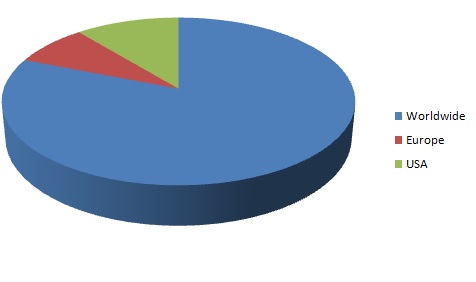
In Switzerland, 8% of Neuro researchers are going. In the USA 11% of Neuro research is going.

To Collaborate Scientific Professionals around the World

Conference Date March 24-25, 2027

For Sponsors & Exhibitors

[email protected]

Speaker Opportunity

Past Conference Report

Supported By

All accepted abstracts will be published in respective Conference Series International Journals.

Abstracts will be provided with Digital Object Identifier by